
SME opportunities · Informal economy series
Informality in a suit and tie
When formal does not mean structured

Series "The informal sector, SMEs and the economy in Africa", article 3 of 11
This article builds on the argument I make in "Should we really formalize the informal sector?": rather than forcing the informal sector to formalize, integrate it, starting from what it already does.
We are quick to accuse the small trader of dodging the rules. We talk much less about the registered company, official stamp in hand, that keeps no accounts, makes no profit and lives on connections rather than customers. The real divide is not between formal and informal: it is between what is structured and what is not.
Introduction: two pictures of Abidjan
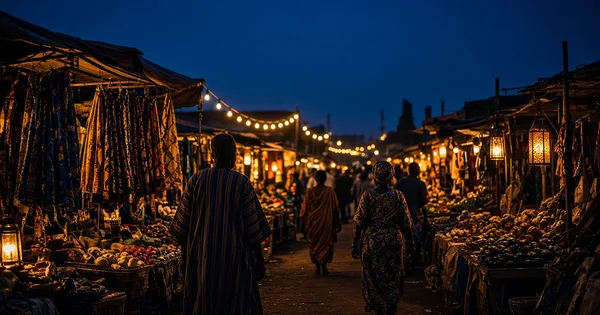
At the Gouro market in Adjamé, the women who sell food crops have no limited company and no trade register entry. Yet they have a cooperative, a president elected by a general assembly, and the ability to rally every food crop cooperative "for coordinated action" when a dispute pits them against a property developer (Kpodion, 2015). A few kilometres away, other businesses have everything the first group lacks: articles of association, a registration number, a bank account. But no proper books, no strategy, no customers beyond a few contracts won through connections. I have spent time in both worlds; it is the second that worries me.
The figures tell the same story. In 2023, only 47.9% of the Ivorian formal firms surveyed by the World Bank had been formal from the day they started operating, against an average of 79.3% in sub-Saharan Africa (World Bank, 2023). Today’s formal sector is often yesterday’s informal sector: registration came later, sometimes to win a contract. On its own, it did not change the way people work.
You cannot bring the informal sector into the formal one by decree. This article asks the opposite question: what is the formal sector worth when it is only a front? And what should we reward: the stamp, or the ability to create value?
I. Formal does not mean structured
Statisticians have known it for a long time: the line between formal and informal does not run where we think. The International Labour Organization distinguishes the sector, meaning the production unit, from employment, meaning the worker’s situation. In Africa, 76.0% of employment is in the informal sector; but informal employment also exists inside formal firms, where it accounts for 5.5% of total employment and 9.4% of non-agricultural employment (ILO, 2018). So businesses fully listed in the trade register employ people with no contract and no social contributions.
The reverse is just as true. In French-speaking Africa, the "large informals" sometimes post turnover that rivals that of formal firms (Benjamin and Mbaye, 2012). For Max Gallien and Vanessa van den Boogaard, the binary opposition between formal and informal is one of the misconceptions that have sunk so many formalization policies (Gallien and van den Boogaard, 2023). Rafael La Porta and Andrei Shleifer, who take a harsh view of the informal sector, locate the performance gap first in human capital: informal firms are run by entrepreneurs with far less education than those in the formal sector (La Porta and Shleifer, 2014). What makes the difference is not legal status; it is skills, organization and internal rules.
Box. Formal, informal, structured: what are we talking about? Formal: listed in state registers (trade register, tax number). Informal: not listed, or only partly. Structured: organized in a way that allows the business to last and grow, with books kept, targets tracked, decision rules, and the business’s cash kept separate from the owner’s. Crossing the two gives four boxes. Public policy looks only at the first distinction; it is the second that determines whether value gets created.
II. The symptoms, in figures
The World Bank survey of 649 formal Ivorian firms, carried out from April to September 2023, lets us measure what registration does not guarantee (World Bank, 2023).
Box: what the 2023 survey of formal Ivorian firms reveals
| Indicator (2023) | Côte d’Ivoire | Sub-Saharan Africa |
|---|---|---|
| Formal from the start of operations | 47.9% | 79.3% |
| Management practices index (out of 100) | 41.7 | 49.6 |
| Performance indicator monitoring score | 16.0 | 34.4 |
| Firms offering formal training | 27.1% | - |
| "Gifts" expected in meetings with tax officials | 20.3% | 14.4% |
| Competing against informal firms | 76.5% | 62.5% |
Source: World Bank (2023), Enterprise Surveys, Côte d’Ivoire 2023.
Flying blind. The management practices index, which measures how a firm sets targets, tracks results and rewards performance, stands at 41.7 out of 100, against 49.6 in sub-Saharan Africa. The gap is even wider for monitoring performance indicators: 16.0 against 34.4 (World Bank, 2023). A business that does not measure what it produces knows neither what it earns nor where it loses. This is the "no internal controls" that everyone has come across.
Skills left to stagnate. Just over one formal firm in four (27.1%) offers formal training to its staff (World Bank, 2023). The training gap, which I identify as one of the roots of the informal sector in "Should we really formalize the informal sector?", does not stop at the door of the formal sector.
Connections rather than the market. One firm in five (20.3%) says it expects to give gifts when meeting tax officials, against a regional average of 14.4%; 19.8% have received at least one bribe request, and 37.0% of large firms name corruption as their main obstacle (World Bank, 2023). Côte d’Ivoire scores 43 out of 100 on the 2025 Corruption Perceptions Index, ranking 76th out of 182 (Transparency International, 2026). In that environment, the best-connected firm can beat the best-run one.
A paradox. Three formal firms in four (76.5%) say they face competition from informal firms, far above the regional average (62.5%) (World Bank, 2023). Yet many of them came out of the informal sector themselves. So the problem is not only "unfair" competition from the informal sector; it is also the weakness of a formal sector that stands out neither for quality nor for organization.
III. Public procurement: a mirror and an accelerator
Public contracts are where informality in a suit and tie is most visible, because that is where registration pays off most. Two official documents describe 2023, and they disagree on one key point: the share of single-source contracts, meaning contracts awarded with no competitive tender.
The Ministry of Finance and Budget’s report to the Council of Ministers, based on contracts approved as of the end of December 2023, counts 5,288 contracts worth 1,101.9 billion CFA francs; single-source contracts account for 14.8% of the value (252 contracts, 163.0 billion), against 13.3% in 2022. The increase is attributed mainly to urgent spending linked to AFCON 2023 (DGMP, 2024).
The general report of the Public Procurement Regulatory Authority (ARCOP), using data also attributed to the DGMP, gives a 2023 total of 4,003 contracts worth 1,199.5 billion CFA francs, including 421 single-source contracts worth 492.1 billion, or 41% of the value, against 13.2% in 2022 (ARCOP, 2025).
The two sources agree on 2022 (333 single-source contracts, 154.9 billion) but diverge on 2023, on both the total number of contracts and their value. Neither explains the gap, which most likely comes down to different scopes or different data cut-off dates. So I use a range, from 14.8% to 41% of the value, and one shared finding: the use of single-source contracts rose in 2023. Clearing up this discrepancy would, in itself, be a step forward for transparency.
The two sources also agree on another trend: SMEs are losing ground. According to the DGMP, their share of the number of approved contracts fell from 72.1% to 59.2%, and from 46.1% to 45.4% by value, still above the regulatory threshold of 30% (DGMP, 2024). According to ARCOP, which relies on ANStat data on contract holders, it fell from 72% to 61% by volume and from 54% to 40% by value; the Authority blames "the weakness of the administrative, technical and financial capacities" of SMEs (ARCOP, 2025).
The same report offers two more troubling clues. Over 85% of contract holders are based in the Abidjan area. And about a third of 2023 contracts, between 33% and 36% depending on whether you count by number or by value, went to firms less than three years old (ARCOP, 2025). These figures prove no fraud; they describe procedures. But they raise a question, and I stand by it: how many of these young firms were set up to capture a contract rather than to produce anything?
The state bears its share of the blame too. Half of the conciliation requests filed with the regulator in 2023 concern late payment of contract holders’ invoices, and two thirds ended without agreement; ARCOP sees this as a threat to the financial and technical capacity of SMEs (ARCOP, 2025). A state that pays late hurts the businesses that work seriously first, and favours those that have other ways of getting paid.
IV. The counter-model: a structured informal sector
Back to the Gouro market. What its traders show is not an absence of rules, but rules of a different kind: a cooperative, an elected president, the ability to negotiate and defend themselves collectively (Kpodion, 2015; see my article "Women of the informal sector: from the Gouro market to equal access"). Structure is a skill, and that skill already exists outside the formal sector. That is what public policy should recognize and equip, instead of demanding articles of association first.
Let’s not romanticize it. Kate Meagher showed, in Aba, Nigeria, that informal business networks that had long been dynamic could slide into disorder under the effects of liberalization, state decline and political capture (Meagher, 2010). Informal governance is a resource; it does not replace a state that does its job.
V. Build structure, not stamps
If status does not create value, we must stop rewarding status and start rewarding structure. I propose four ways to do it.
Reward proper books, not the stamp. The tools exist. OHADA accounting law provides a minimal cash-based system for small entities, under 60 million CFA francs of turnover for trading, 40 million for crafts and 30 million for services (OHADA, 2017, art. 13). In Côte d’Ivoire, joining an approved management centre halves the entreprenant’s state tax and cuts the microenterprise tax from 6% to 4% (DGI Côte d’Ivoire, 2025). These advantages should be known to everyone, and extended: a reduced rate and priority access to credit for any business, formal or not, that keeps its books (see my article "SMEs: a tax that invests in those who pay it").
Open public procurement to those who produce. Smaller lots and local contracts, reserved for local businesses able to deliver rather than those best at winning bids; a share of single-source contracts published every quarter and brought back to the exception; payment deadlines met, and late-payment interest actually paid.
Tie credit to support. In Japan, the public "Marukei" loan, created in 1973, is granted with no collateral and no guarantor, up to 20 million yen, to small businesses that have generally been supported for at least six months by their chamber of commerce, are recommended by it and are up to date with their taxes (JCCI, n.d.; JFC, n.d.; see my article "What the world can teach us: Mauritius, Rwanda, Ghana, Brazil, Germany, Japan"). Adapted to our context, management support from a chamber of commerce or a trade association, plus a contribution paid regularly, would open access to credit with no guarantor.
Never formalize without support. In Benin, an experiment with 3,600 informal businesses when the entreprenant status was launched showed that information alone was not enough, and that the businesses that formalized gained neither sales nor profits (Benhassine et al., 2018; see my article "Formalize or support? States and local governments facing the persistence of the informal sector"). Registration without support produces statistics at best; at worst, new fronts.
What critics might say
"You are smearing formal businesses." No. Most Ivorian businesses, formal or not, work honestly and in difficult conditions; they are the ones that favouritism hurts. My criticism targets a system that rewards appearances, not the entrepreneurs caught up in it.
"Young businesses must be able to win contracts too." Of course, and they should. The problem is not a firm’s age but a lack of real capacity to deliver. Hence capacity criteria proportionate to the size of the lots, rather than barriers based on years in business.
"The figures contradict each other." On single-source contracts, yes, and I have said so. But the two sources agree on what matters most: a rise in single-source contracts in 2023 and a falling share for SMEs. The uncertainty itself is a case for publishing public procurement data regularly, in detail and consistently.
Conclusion: aim at the right target
A policy that looks only at legal status is aiming at the wrong target. It pushes some to register for nothing, and lets others thrive behind a stamp. Being formal is not a virtue; being structured is. You can see it in books that are kept, targets that are tracked, staff who are trained, and customers rather than patrons.
Recognizing the businesses that create value, whatever their status, and helping them build structure: that is the whole point of the single contribution and what it gives in return. But that still takes a tax system that rewards rigour rather than the stamp.
Also in this series: "Rethinking taxation of the informal sector: a single variable-rate contribution, a flat fee and gradual steps". How to build a simple contribution based on turnover, with a rate that adapts to the sector and the business, and why it must open visible rights.
References
ARCOP - Autorité de régulation de la commande publique [Public Procurement Regulatory Authority] (2025). Rapport général sur la commande publique, gestion 2023. Abidjan: ARCOP. https://arcop.ci/download/175/rapports-dactivites/19896/rapport-general-de-la-commande-publique-gestion-2023-2.pdf
World Bank (2023). Enterprise Surveys: Côte d’Ivoire 2023 Country Profile. Washington, DC: World Bank. https://www.enterprisesurveys.org/content/dam/enterprisesurveys/documents/country/Cote-Divoire-2023.pdf
Benhassine, N., McKenzie, D., Pouliquen, V. and Santini, M. (2018). "Does inducing informal firms to formalize make sense? Experimental evidence from Benin". Journal of Public Economics, 157, 1-14. https://doi.org/10.1016/j.jpubeco.2017.11.004
Benjamin, N. and Mbaye, A. A. (2012). The Informal Sector in Francophone Africa: Firm Size, Productivity, and Institutions. Washington, DC: World Bank / AFD. https://doi.org/10.1596/978-0-8213-9537-0
DGI Côte d’Ivoire (2025). Impôts et taxes en Côte d’Ivoire : tableau synoptique, édition 2025. https://www.dgi.gouv.ci/assets/documents/IMPOTS%20ET%20TAXES%20EN%20COTE%20D'IVOIRE%20.pdf
DGMP - Direction générale des marchés publics [Directorate General of Public Procurement], Ministry of Finance and Budget (2024). Communication en Conseil des ministres : situation des opérations de passation des marchés publics au titre de la gestion 2023. https://www.marchespublics.ci/uploads/doc/Projet_CCM_March%C3%A9s_2023.pdf
Gallien, M. and van den Boogaard, V. (2023). "Formalization and its Discontents: Conceptual Fallacies and Ways Forward". Development and Change, 54(3), 490-513. https://doi.org/10.1111/dech.12768
JCCI - Japan Chamber of Commerce and Industry (n.d.). マル経融資 [Marukei loan]. https://www.jcci.or.jp/support/financing/marukei/index.html
JFC - Japan Finance Corporation (n.d.). マル経融資(小規模事業者経営改善資金) [Marukei loan, management improvement fund for small businesses]. https://www.jfc.go.jp/n/finance/search/kaizen_m.html
Kpodion, H. (2015, July 27). « Marché Gouro d’Adjamé Roxy : des femmes du vivrier sur le pied de guerre ». Linfodrome. https://www.linfodrome.com/societe-culture/22105-marche-gouro-d-adjame-roxy-des-femmes-du-vivrier-sur-le-pied-de-guerre
La Porta, R. and Shleifer, A. (2014). "Informality and Development". Journal of Economic Perspectives, 28(3), 109-126. https://doi.org/10.1257/jep.28.3.109
Meagher, K. (2010). Identity Economics: Social Networks and the Informal Economy in Nigeria. Woodbridge: James Currey. https://doi.org/10.1515/9781846157905
OHADA (2017). Acte uniforme relatif au droit comptable et à l’information financière, adopted in Brazzaville on January 26, 2017. https://www.ohada.org/acte-uniforme-relatif-au-droit-comptable-et-a-linformation-financiere-audcif/
ILO (2018). Women and Men in the Informal Economy: A Statistical Picture, 3rd edition. Geneva: ILO. https://www.ilo.org/sites/default/files/2024-04/Women_men_informal_economy_statistical_picture.pdf
Transparency International (2026). Corruption Perceptions Index 2025: Côte d’Ivoire. https://www.transparency.org/en/countries/c%C3%B4te-divoire
Get my free guide Investir et entreprendre en Côte d'Ivoire (in French).
Get the guide Let's talk about your projectFurther reading
Should we really formalize the informal sector?
Three levers, built on fintech, to turn Africa’s grassroots economy into an engine of development
· 13 min read

Fintechs and the economically invisible
Case studies and a map of solutions for micro-businesses and informal workers
· 12 min read