
Market analysis · Informal economy series
Should we really formalize the informal sector?
Three levers, built on fintech, to turn Africa’s grassroots economy into an engine of development
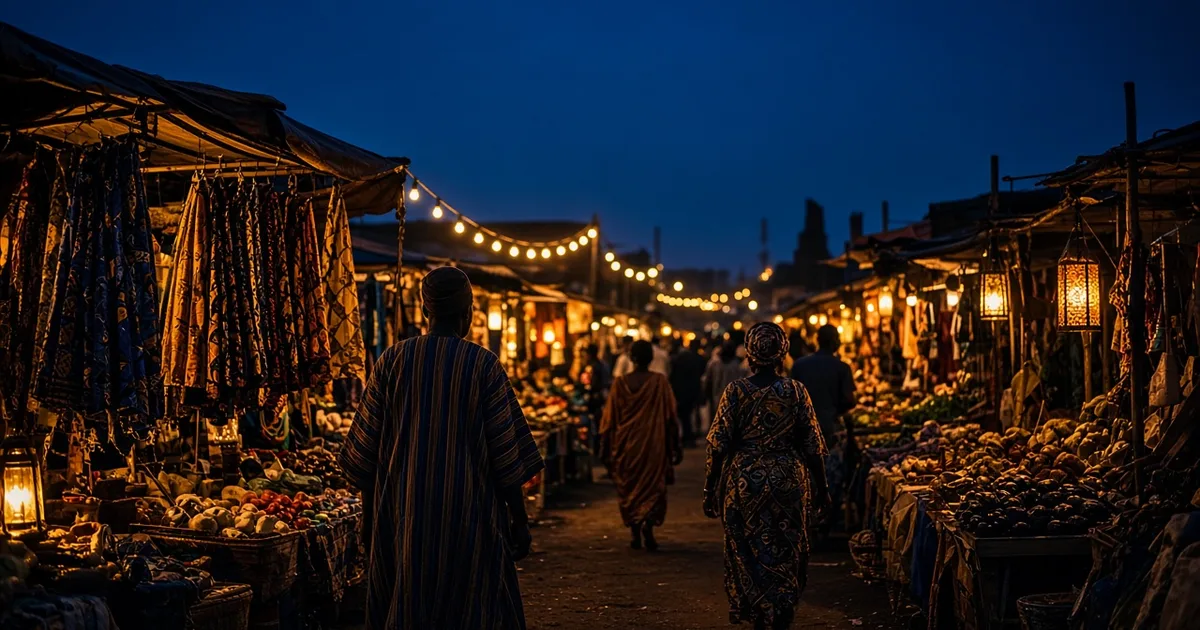
More than eight jobs in ten in Africa are informal. Instead of forcing this economy into a uniform cut for someone else, let’s bring it in: local registration, a single contribution and collection by mobile money, opening the door to social protection, credit, insurance and savings.
Introduction
On the streets of Ouagadougou, in the traffic jams of Abidjan, in the busy back lanes of Cotonou, sub-Saharan Africa works, produces, buys, repairs, sells and moves goods, with no tax number and no clear legal status. The informal sector is usually described as the part of the economy that escapes the state, because it pays little or no tax, and it is often written off as a sector "without rules". In reality, it is an economy of resilience, innovation and closeness to people. It is not an anomaly: in many countries, it is the norm.
That view rests on an assumption: that you should have to ask permission before you work. The law says the opposite. The Ivorian Constitution guarantees free enterprise (Côte d’Ivoire, 2016). OHADA law lets the entreprenant operate on a simple declaration, free of charge (OHADA, 2010). Declare first, check later: that is the rule of a free economy.
The data leave no room for doubt: 85.8% of jobs in Africa are informal, and most workers end up there not by choice but because the formal economy has no opening for them (ILO, 2018). Yet this economy is still misunderstood, underestimated, and even fought, by international institutions and by many countries in sub-Saharan Africa.
None of this is new. As early as 1973, in Accra, the anthropologist Keith Hart, who popularized the very idea of the "informal", asked whether these activities might have their own capacity to generate income and growth (Hart, 1973). This article, the first in a series of eleven, argues one conviction: we should not force the informal sector to formalize, we should integrate it, building on what it already does well and drawing on fintech. My starting point is Côte d’Ivoire and its West African neighbours.
Part I: Diagnosing a misunderstood sector
The informal sector is neither fraud nor crime: it is organized survival
Contrary to popular belief, some of the most questionable practices are found among so-called "formal" players: hiring without contracts, no social contributions, unfair dismissals. Informality sometimes wears a suit and tie. In Côte d’Ivoire, one formal firm in five says it expects to "give gifts" to tax officials (World Bank, 2023). My article "Informality in a suit and tie: when formal does not mean structured" is devoted to this paradox.
The informal economy, for its part, is mostly made up of lawful activities that slip past state oversight. Is that a problem in itself? Not really. First and foremost, it shows a state that has managed neither to serve these activities nor to recognize them. Wanting to control everything before anyone has even opened shop is the logic of a command economy, not of a state that acts as a partner.
The informal sector grows out of gaps. Long before the lack of social protection (19.1% of Africans covered in 2023; ILO, 2024), there is the lack of suitable training. There is a freedom to do business that is held back: here, working in a craft trade requires a qualification and registration in the trades register (Côte d’Ivoire, 2014). There are markets that are too small: no small West African country will ever sustain a car industry on its own. The informal sector is simply the shape this resilience takes. The word, with its negative ring, hides a real achievement: social survival mechanisms that stand on their own, without the state.
The informal sector is a neighbourhood economy
Informal businesses meet immediate, local needs, often in areas the formal circuits have abandoned. Anyone who knows Abidjan knows what the city owes to the commitment and grit of the women of the Gouro market in Adjamé, the very model of a structured informal sector: they coordinate and run the food crop trade brilliantly, with no red tape and no paperwork.
The stalls lining the streets of Lomé and the neighbourhood shops of Abidjan, often run by Mauritanian traders, distribute the products of multinationals. Far from being illegal competition, the informal sector is very often the logistical shadow of the formal one.
Part II: An institutional framework that pushes people into informality
The cult of the limited company and the obsession with paperwork
We too often confuse formalization with registering at CEPICI or at the commercial court, as if ticking a box were enough to structure an economy. But what creates value is neither the legal form nor the official stamps: it is the business model, the ability to produce useful wealth, an offer that meets a need. Hernando de Soto showed it in Lima: legally registering a small garment workshop there had taken 289 days of procedures (De Soto, 2000).
Benin’s more recent experience points the same way. When the entreprenant status was launched, almost no business registered on its own. And those that were helped to do so gained neither sales nor profits (Benhassine et al., 2018). When being legal costs more than it brings in, staying informal becomes a rational choice.
By standardizing without looking at context, we end up shutting out what matters most: the spirit of innovation and initiative. The obsession with norms stifles private enterprise.
A punitive, opaque tax system cut off from reality
The second thing that pushes people into the informal sector is a tax system out of touch with reality and full of contradictions. In many African countries, taxation looks like a sacrificial rite: even with no activity, you have to pay. The minimum lump-sum tax is an absurdity that discourages many entrepreneurs on the road to formalization. The state, supposed to be a partner in development, ends up collecting anxiety. Small businesses have to pay taxes when they understand neither where they come from, nor what they are for, nor how they are spent. Staying informal then becomes a way to protect yourself. Deep down, people are often punished for having tried to create value.
Given the weight of the informal sector and these findings, it is urgent to let the two sectors live side by side rather than wipe out one for the sake of the other.
Part III: Our three-lever approach
Before proposing anything, we need to learn, because the informal sector has a great deal to teach us. A frugal economy if ever there was one, agile and creative, it is often more modern in its practices than the formal sector: mobile payment, social media, flexible prices, day-to-day adaptation. It is a genuine laboratory of social and economic innovation, and it should be supported, not fought.
After years spent alongside these businesses and their ecosystem, and after reading many public policies that came to nothing, I have arrived at an approach built on three complementary levers: local registration with a decentralized directory, a single contribution, and digital payment. It draws on successes from elsewhere, but it starts above all from informal businesses and what they already do. The point is to give them the means to do better what they already know how to do, not to load them with a new burden and kill all creativity.
One principle runs through all three levers. We believe in the ability of these entrepreneurs, like that of SMEs, to create value. If there is to be a contribution, it should benefit them first. So part of every payment would go to their own services: training, social protection, market upgrades. And everyone would see that share printed on their receipt.
Lever 1: Local registration and a decentralized directory
Let’s simplify registration: signing up should not be an obstacle course. By allowing people to register close to where they work, at the town hall or the sub-prefecture, we gain proximity, traceability and recognition. A simple declaration would be enough. Every business registered this way would receive a unique identifier with a regional prefix. That identifier would become the key to the other two levers: the contribution, and also the rights it opens.
Lever 2: A single contribution, with a rate that varies by sector
Rather than a pile of taxes and levies, a single contribution based on actual turnover, or on a more relevant measure depending on size and margin structure, at a rate set according to the sector and the nature of the business. It would replace the crushing weight of a tax system, and above all of a web of parafiscal levies, that is too often complex and ill-suited.
How should the rate be set? A flat rate would weigh far more heavily on a low-margin shop than on a service business, so it has to vary. It would stay close to Côte d’Ivoire’s simplified regimes, which take 2% to 6% of turnover without opening any social rights (DGI Côte d’Ivoire, 2025). As an illustration, a rate of around 7% including a social contribution would remain comparable, with a visible return, to be calibrated through pilot phases.
For the smallest, a monthly flat fee. For the street vendor or the neighbourhood repairman, we propose a modest flat fee, in the range of 500 to 2,000 CFA francs a month, payable by phone and opening concrete rights: basic health micro-insurance, access to microcredit. The flat fee would be the way in; above a threshold set by law, the sector rate would take over, in gradual steps to avoid any cliff effect.1
Lever 3: Digital payment, automatic allocation… and much more
Paying by mobile money would make collection easier and cut the opportunities for corruption. As soon as a payment arrives, a public algorithm would split it between the municipality, the state and social security. Côte d’Ivoire has already led the way: the impôt synthétique and property tax can be paid through Orange Money, MTN or Moov (Akpa, 2020).
But fintech can go far beyond payment. In Abidjan, the size of an Orange Bank Africa Tik Tak loan already depends on how the borrower uses Orange Money (Orange Bank Africa, n.d.), just as in Kenya an M-Shwari loan depends on M-Pesa use (Safaricom, n.d.). Tomorrow, a contribution paid regularly could strengthen that credit profile.
Applied well, these measures could transform our economies, letting them focus on creating value rather than on the legal form of the businesses that create it.
Answering the objections
"It’s a tool for tax surveillance." The fear is legitimate. Hence three safeguards: data limited to calculating the contribution and the rights; no back-taxing of the past; a contribution based on activity, never on each transfer. Ghana learned this the hard way: its tax on electronic transfers drove users back to cash (GSMA, 2023).
"The informal sector is structurally unproductive." This is the most serious objection. According to the World Bank, labour productivity in informal firms is only about a quarter of that in formal firms (Ohnsorge and Yu, 2021). All the more reason for registration to open access to credit, insurance and training. And that finding is purely economic: can anyone seriously imagine shutting out 80% of Africa’s working population?
Part IV: Models that inspire
No model can simply be copied. But three experiences show that our three levers are not utopian.
In Brazil, a flat fee that protects. With annual turnover of up to 81,000 reais, a small tradesperson can become a micro-entrepreneur (Government of Brazil, n.d.-a). They pay a flat fee of 82 to 87 reais a month, almost all of it going to their social security (Receita Federal, 2026). In return: a pension, sick pay, maternity leave (Government of Brazil, n.d.-b). More than 12 million Brazilians have chosen this status (Brazilian Ministry of Entrepreneurship, 2025). The lesson for our second lever: a small fee paid every month can open real rights.
In Germany, business tax goes to the municipality first. In Frankfurt, the trade tax brought in 3.17 billion euros in 2024, more than half of the city’s ordinary revenue (City of Frankfurt, 2025). The municipality sets the rate, then passes a share on to the federal government and the Land, under a rule laid down in law for more than fifty years (GemFinRefG; BMF, 2026). The lesson for our third lever: sharing the same revenue between the municipality and the state, using a formula everyone knows, is possible. And the municipality, the one that sees the traders and looks after their market, should be served first.
In Japan, a good track record stands in for collateral. Since 1973, a small business supported by its chamber of commerce and up to date with its taxes can, on the chamber’s recommendation, obtain a public loan with no collateral and no guarantor: the "Marukei" loan (JCCI, n.d.; JFC, n.d.). The lesson for all three levers together: an association that provides support, a contribution paid regularly, and credit follows. Our chambers of trades and our traders’ associations could play this role.
Conclusion: Bridges, not uniforms
Yes, African economies are largely informal. No, that does not mean they are disorganized, illegitimate or lacking ambition. The informal sector is not a brake on development: it is the sign of a state that needs modernizing. We should not formalize the informal sector the way you force a uniform on a schoolchild; we should build realistic bridges, invent intermediate statuses and design a more humane tax system, one that gives back to those who pay.
We are convinced this approach will work better than today’s push for forced formalization. Because behind every makeshift kiosk, every shop overflowing with goods, every tailor without a sign, there is a creative, productive citizen looking for dignity. Recognizing that is already a first step towards an economic model that is fairer, more effective and, above all, more African.
The series in eleven articles
Each of these ideas is explored in depth, with evidence and case studies, in the eleven articles of the series:
The informal sector, Africa’s laboratory: a strategic reading of the parallel economy
Formalize or support? States and local governments facing the persistence of the informal sector
Informality in a suit and tie: when formal does not mean structured
Rethinking taxation of the informal sector: a single variable-rate contribution, a flat fee and gradual steps
What the world can teach us: Mauritius, Rwanda, Ghana, Brazil, Germany, Japan
SMEs: a tax that invests in those who pay it
Social protection: economic citizenship within everyone’s means
Fintechs and the economically invisible: case studies and a map of solutions
Beyond mobile money: economic inclusion, data and trust
Women of the informal sector: from the Gouro market to equal access
Towards a tax pact for the informal sector: rights before duties
References
Akpa, M. A. (2020, March 24). « DGI : les contribuables invités au paiement des impôts synthétique et foncier en utilisant la solution DGI-Mobile ». Fraternité Matin. https://www.fratmat.info/article/202937/economie/dgi-les-contribuables-invites-au-paiement-des-impots-synthetique-et-foncier-en-utilisant-la-solution-dgi-mobile
World Bank (2023). Enterprise Surveys: Côte d’Ivoire 2023 Country Profile. Washington, DC: World Bank. https://www.enterprisesurveys.org/content/dam/enterprisesurveys/documents/country/Cote-Divoire-2023.pdf
Benhassine, N., McKenzie, D., Pouliquen, V. and Santini, M. (2018). "Does inducing informal firms to formalize make sense? Experimental evidence from Benin". Journal of Public Economics, 157, 1-14. https://doi.org/10.1016/j.jpubeco.2017.11.004
BMF - German Federal Ministry of Finance (2026). Kommunalfinanzen. https://www.bundesfinanzministerium.de/Content/DE/Standardartikel/Themen/Oeffentliche_Finanzen/Foederale_Finanzbeziehungen/Kommunalfinanzen/kommunalfinanzen.html
Côte d’Ivoire (2014). Loi n° 2014-338 du 5 juin 2014 relative à l’artisanat [Law on crafts and trades]. https://faolex.fao.org/docs/pdf/ivc167060.pdf
Côte d’Ivoire (2016). Loi n° 2016-886 du 8 novembre 2016 portant Constitution de la République de Côte d’Ivoire, révisée par la loi n° 2020-348 [Constitution, as amended]. https://mjp.univ-perp.fr/constit/ci2020.htm
De Soto, H. (2000). The Mystery of Capital: Why Capitalism Triumphs in the West and Fails Everywhere Else. New York: Basic Books.
DGI Côte d’Ivoire (2025). Impôts et taxes en Côte d’Ivoire : tableau synoptique, édition 2025. https://www.dgi.gouv.ci/assets/documents/IMPOTS%20ET%20TAXES%20EN%20COTE%20D'IVOIRE%20.pdf
GemFinRefG - Gemeindefinanzreformgesetz (German Municipal Finance Reform Act), § 1 and § 6, current version. https://www.gesetze-im-internet.de/gemfinrefg/
Government of Brazil (n.d.-a). "O que você precisa saber antes de se tornar um MEI". https://www.gov.br/empresas-e-negocios/pt-br/empreendedor/quero-ser-mei/o-que-voce-precisa-saber-antes-de-se-tornar-um-mei
Government of Brazil (n.d.-b). "Quem é MEI tem direito a quais benefícios previdenciários?". https://www.gov.br/empresas-e-negocios/pt-br/empreendedor/perguntas-frequentes/previdencia-social/quem-e-mei-tem-direito
GSMA (2023). The E-levy in Ghana: Economic Impact Assessment. https://www.gsma.com/solutions-and-impact/connectivity-for-good/public-policy/wp-content/uploads/2023/03/E-Levy-Ghana-Economic-Impact-Assessment.pdf
Hart, K. (1973). "Informal Income Opportunities and Urban Employment in Ghana". The Journal of Modern African Studies, 11(1), 61-89. https://doi.org/10.1017/S0022278X00008089
JCCI - Japan Chamber of Commerce and Industry (n.d.). マル経融資 [Marukei loan]. https://www.jcci.or.jp/support/financing/marukei/index.html
JFC - Japan Finance Corporation (n.d.). マル経融資(小規模事業者経営改善資金) [Marukei loan, management improvement fund for small businesses]. https://www.jfc.go.jp/n/finance/search/kaizen_m.html
Brazilian Ministry of Entrepreneurship, Microenterprise and Small Business (2025). Mapa de Empresas: boletim do 2º quadrimestre de 2025. https://www.gov.br/empresas-e-negocios/pt-br/mapa-de-empresas/boletins/mapa-de-empresas-boletim-2o-quadrimestre-2025.pdf
OHADA (2010). Acte uniforme révisé portant sur le droit commercial général, adopted in Lomé on December 15, 2010. https://www.ohada.com/uploads/actualite/1203/droit-commercial.pdf
Ohnsorge, F. and Yu, S. (eds.) (2021). The Long Shadow of Informality: Challenges and Policies. Washington, DC: World Bank. https://doi.org/10.1596/35782
ILO (2018). Women and Men in the Informal Economy: A Statistical Picture, 3rd edition. Geneva: ILO. https://www.ilo.org/sites/default/files/2024-04/Women_men_informal_economy_statistical_picture.pdf
ILO (2024). World Social Protection Report 2024-26. Geneva: ILO. https://www.ilo.org/sites/default/files/2024-09/WSPR_2024_EN_WEB_1.pdf
Orange Bank Africa (n.d.). « Prêt Tik Tak ». https://orangebank.ci/pret-tiktak-classique
Receita Federal do Brasil (2026). "MEI - atualização de valores devidos em 2026", January 2, 2026. https://www8.receita.fazenda.gov.br/simPlesnacional/Noticias/NoticiaCompleta.aspx?id=c3b2044c-ff97-432a-b33c-ecf2a3df6dc3
Safaricom (n.d.). "M-Shwari FAQs". https://www.safaricom.co.ke/media-center-landing/frequently-asked-questions/m-shwari-faqs-safaricom
City of Frankfurt am Main (2025, April 29). "Städtischer Haushalt: Jahresergebnis 2024", press release. https://frankfurt.de/de-de/aktuelle-meldung/meldungen/staedtischer-haushalt-jahresergebnis-2024/
I go into this two-tier mechanism in detail in my articles "Rethinking taxation of the informal sector: a single variable-rate contribution, a flat fee and gradual steps" and "Towards a tax pact for the informal sector: rights before duties".↩︎
Get my free guide Investir et entreprendre en Côte d'Ivoire (in French).
Get the guide Let's talk about your projectFurther reading

Fintechs and the economically invisible
Case studies and a map of solutions for micro-businesses and informal workers
· 12 min read

Informality in a suit and tie
When formal does not mean structured
· 12 min read